

Author: Victorine Hamon
The Famous Project CIC permanently deprived of its mainsail
It was 9 p.m. last night when, during a gybe maneuver to round Terceira Island in the Azores, the head of the mainsail on the IDEC SPORT maxi trimaran tore. It should be noted that this same mainsail had already torn in the middle during a similar maneuver yesterday morning, forcing Alexia and her crew to lower the sail to the second reef. They planned to reach Ushant and the finish line in this configuration, which was perfectly suited to the stormy conditions prevailing over the 1,000-odd miles still to be covered. Alas !
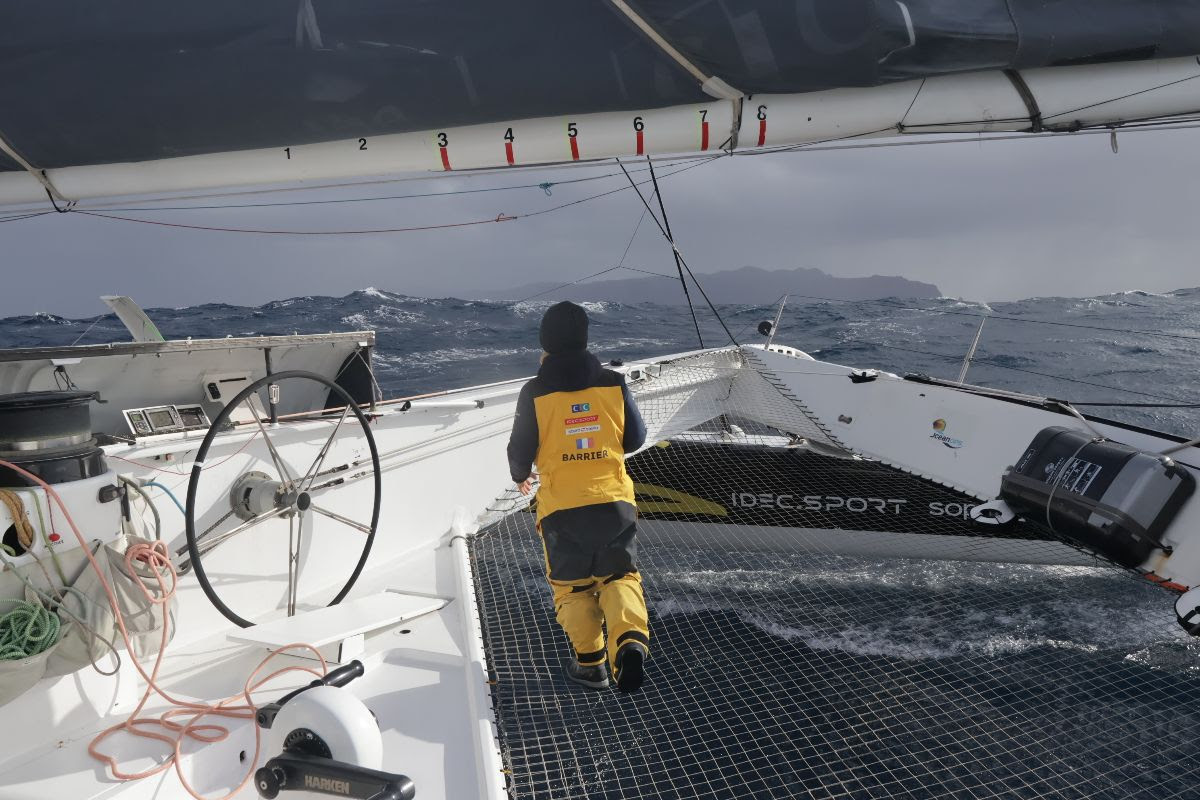
They will now have to do without what remained of this sail and sail exclusively under their wing mast (30m2) and their headsails. So it was under sail that they performed a series of gybes during the night to round the island of Ponta Delgada this morning and leave the Azores in their wake, continuing on their way to the Iberian Peninsula. Conditions in the area, on the southern edge of the depression, are as forecast, with winds of over 35 knots strengthening and a sea already well formed with waves of over 6 meters coming from the northwest, which will continue to grow over the next 24 hours. An unfriendly day lies ahead for the crew, who have already spent 55 days at sea, but whose determination to reach Ouessant and complete the loop remains undiminished.
At a slow trot, propelled by their single mast and headsail, Alexia (Barrier), Dee (Caffari), Annemieke (Bes), Rebecca (Gmür Hornell), Deborah (Blair), Molly (LaPointe), Támara (Echegoyen), and Stacey (Jackson) are hammering away at it; they will see Ushant and complete their round-the-world voyage next Monday evening or Tuesday morning.
Alexia Barrier : “The day is breaking, we haven’t seen the sea yet, and I think that’s better for getting started. We have no sails and are moving at an average speed of over 10 knots with a mast surface area of 30 square meters. We think we’ll be able to unfurl the J3 (staysail) around 11 a.m., once the worst of the sea has passed for the area we’re in. The goal is to stay above 10 knots. Christian (Dumard) has given us a special polar route, without a mainsail. We will keep you informed of the various timings. We are remaining cautious, of course…”
Successful “knitting”!
Sailors, who, as everyone knows, love to use colorful expressions, often use the term “knitting” to describe the delicate tack changes necessary to round or negotiate a rapid change in weather systems ahead of their boats. Last night, the women of The Famous Projects CIC successfully navigated around the north side of an active low-pressure system. Without a hitch, precise in their timing and efficient in their trajectories, Alexia (Barrier), Dee (Caffari), Annemieke (Bes), Rebecca (Gmür Hornell), Deborah (Blair), Molly (LaPointe), Támara (Echegoyen), and Stacey (Jackson) used a series of gybes to move from the south wind to the north-northwest flow ahead of this low-pressure center, which will now propel them in a straight line towards the Chilean coast and, in the short term, Cape Horn.
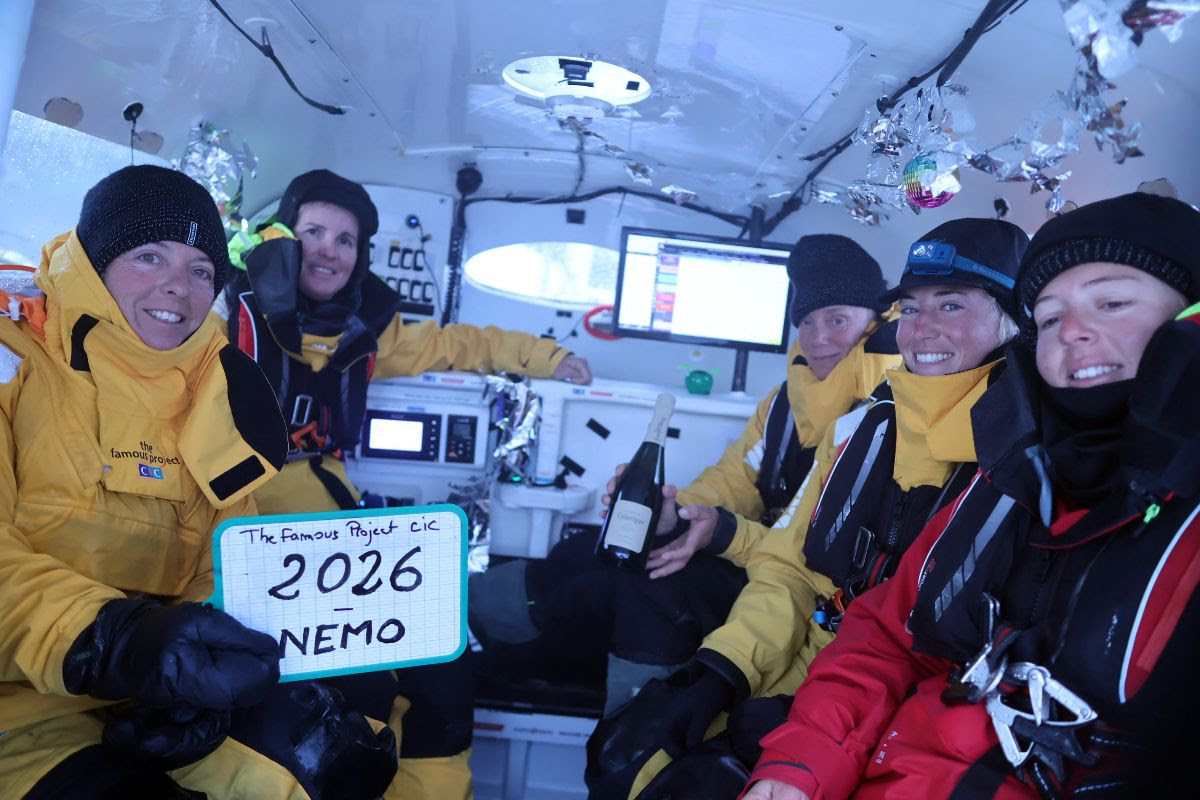
This morning, they left Point Nemo, the “maritime pole of inaccessibility,” on their port side. This geographical location, situated in the middle of the Pacific Ocean, marks the point furthest from any land. They have also passed the precise location where, 27 years ago, the first all-female crew, led by British sailor Tracy Edwards, saw their dreams of a historic round-the-world voyage collapse as their their catamaran Royal & Sun Alliance dismasted. The girls from The Famous Project CIC are now the only female sailors to have come this far in a Jules Verne Trophy race.
There is no glory in this fact, just a reminder of what Dee and Alexia keep hammering home: their presence here is only tolerated, and despite the harsh living conditions and the now omnipresent fatigue, it is at this point in the race that all their indomitable energy is more than ever focused on vigilance and care of the boat.
1 900 miles, or at their current speed, less than four days of sailing, now separate them from the famous Cape Horn, synonymous with a return to the Atlantic and a departure from the land of shadows. Four days of rough and disorderly seas, strong winds, cold, and even snow. But four days of desire, determination, and conviction, to forever mark the history of their sport.
Alexia Barrier
“The Pacific we experiment is very physical. The wind is stronger, sometimes very irregular, with violent gusts of up to 50 knots, and above all a cross sea that shakes constantly. The waves are high, 5 meters, powerful, not always well organized, and the boat moves a lot. It requires constant vigilance, reducing speed, re-accelerating, anticipating.
We are no longer in contemplation, we are in commitment. Although it remains majestic, mystical, hypnotic.
The strategy is quite simple to say, but much more complex to maintain: we have to stay on the right pace.
We must not get trapped by high pressure systems, we must catch the right systems without going too far south, and above all, we must preserve the boat and the crew.
We still have a few very difficult hours ahead of us, then it will calm down as we approach Cape Horn. And then we’ll see. It’s too early to know how it will turn out.
Cape Horn is not conquered by a frontal attack, but by consistency. We are playing the long game.
The movement of the boat is the most difficult thing to deal with. We can equip ourselves for the cold. We can cope with the humidity.
But the constant movement, the acceleration, the shocks, it never stops. The body is always adapting, even at rest. It is as mentally exhausting as it is physically.
Nothing too extravagant for our New Year’s Eve. We ate together, simply, with what we had on hand.
Here, the real celebration is keeping up the pace, keeping the boat moving, and wishing each other a good maneuver rather than a happy new year at the stroke of midnight.
My wish for 2026 is that we continue to be daring. Daring to take on ambitious projects, committed teams, and collective adventures.
And that we take the time to do things right, staying true to who we are, at sea and on land.
A Horn for the history books
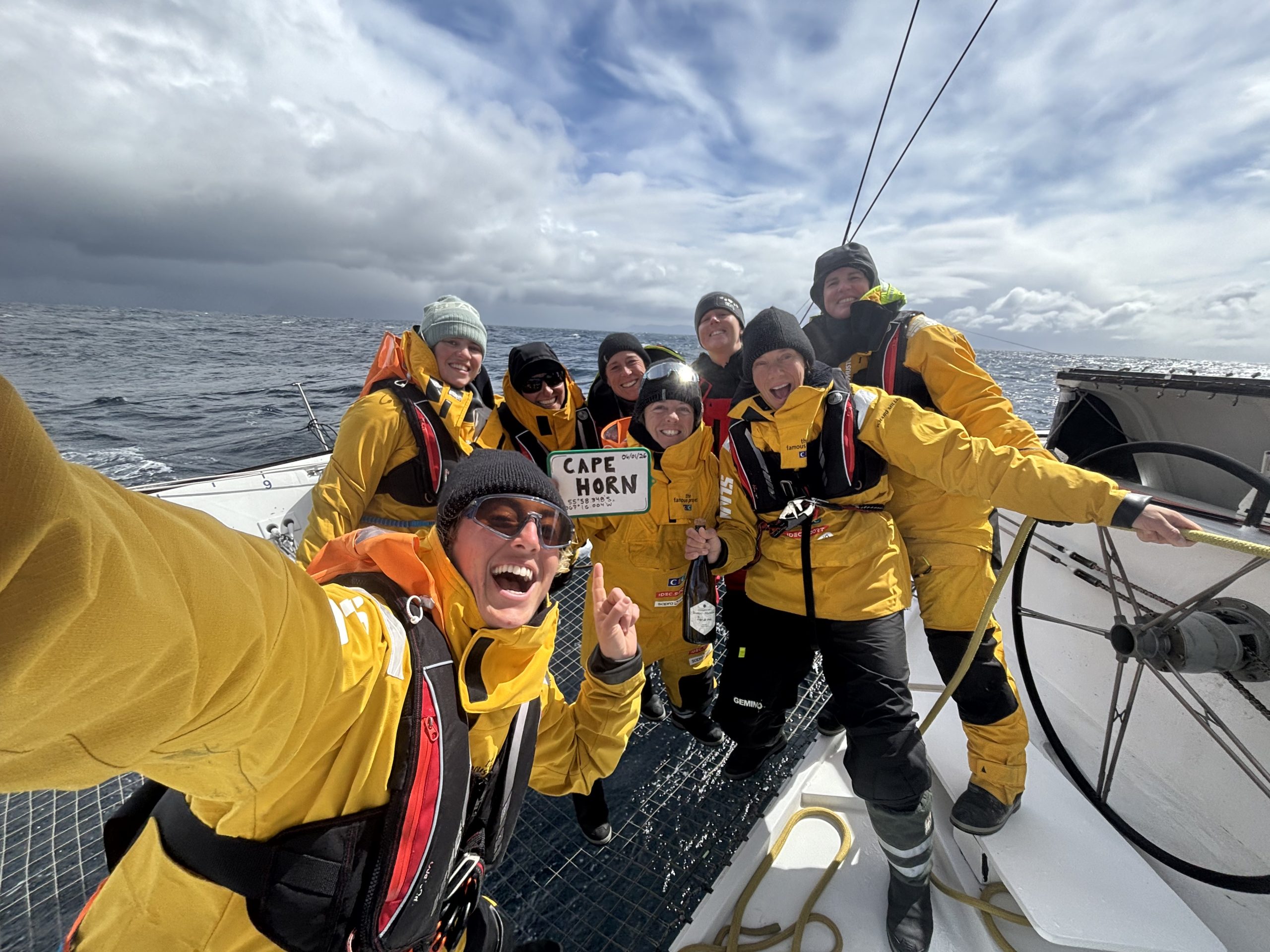
It was 14.14 UTC on Tuesday, January 6, 2026, when The Famous Project-CIC’s IDEC SPORT Maxi Trimaran, led by her highly international crew composed of Alexia (Barrier), Dee (Caffari), Annemieke (Bes), Rebecca (Gmür Hornell), Deborah (Blair), Molly (LaPointe), Támara (Echegoyen), and Stacey (Jackson), rounded Cape Horn. It was a historic moment in the long and storied history of ocean racing, as never before had an all-female crew rounded this famous chilean rock in a non-stop multihull race. On their 38th day of sailing and after covering nearly 16,000 miles (25,700 km), the sailors can now begin the final feat of their journey: crossing the vast Atlantic Ocean. More than ever, the colossal challenge dreamed up by Alexia Barrier and her “girls” to complete a non-stop round-the-world race in a maxi multihull is taking shape with every mile covered towards Ushant and Brest.

A relatively mild Pacific
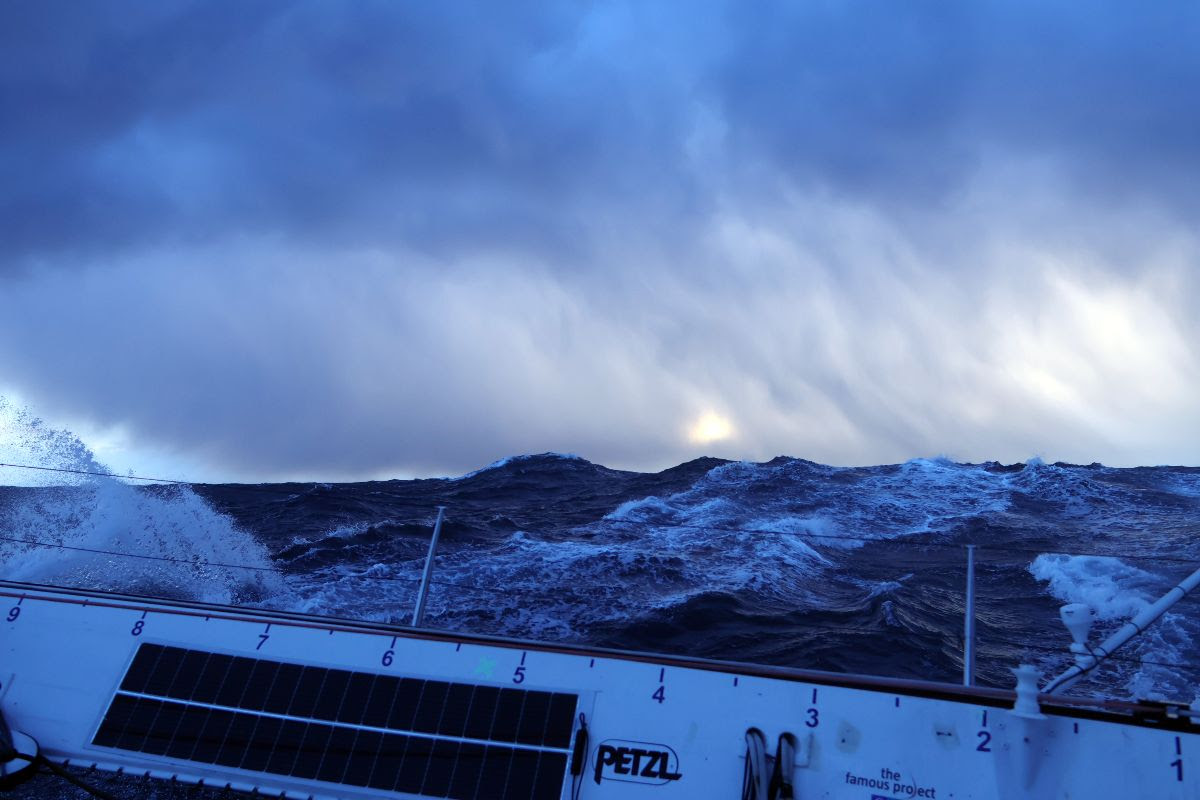
Entering the Pacific at the longitude of Tasmania on December 26, the sailors of The Famous Project-CIC took just under 11 days to reach Cape Horn, then 3 800 miles away. It was a fast crossing, marked by 48 hours of very heavy weather, with hellish seas and waves over 8 meters high, and winds gusting to over 50 knots. The crew, now perfectly attuned to the maneuvers and handling of the maxi trimaran, demonstrated their strength, cohesion, and composure, constantly confronted with a stubborn mainsail hook that sometimes forced them to flee in order to take in or release a reef. It was a trans-Pacific crossing marked by consistency, with the maxi trimaran regularly covering more than 550 miles a day, on a route that was certainly very northern, but efficient and rational, skirting the violent depressions of the far south. Subjected to fatigue, cold, and snow, but always focused on adjustments, anticipation, and the refined piloting of the maxi trimaran, the girls of The Famous Project-CIC have demonstrated the solidarity and constant goodwill that are the hallmarks of a round-the-world race that is now more than ever within their reach.
International milestones
Although the finish line at Ushant is still a long way off and the course is fraught with pitfalls, Cape Horn remains an important milestone in these extreme voyages, still as difficult to round as ever, to the point that few women sailors, solo or in a crew, have ever made it part of a non-stop circumnavigation. Once again, the crew of The Famous Project CIC is the first 100% female crew to round it non-stop from Ushant. Other women, 19 in total, have also achieved this remarkable feat, either solo in the Vendée Globe (13 women), the Barcelona World Race (2) or the Golden Globe Race (2), or in multihulls such as Ellen MacArthur, solo, or Dona Bertarelli as part of a mixed crew. On board The Famous Project- IC, many of them are basking in the glory of this achievement. Dutch sailor Annemieke Bes can now boast of being the first female sailor from the low countries to cross this famous cape, which owes its name to the great Dutch explorer Jacob Le Maire and his hometown of Hoorn, under the conditions described above. Italo-American Molly Lapointe can also claim this first for Italy. As for 25-year-old Briton Deborah “Debs” Blair, she is the third youngest woman after Ellen MacArthur and Violette Dorange to sail in these Antarctic waters.
A third of the race still to go…
Like the Cape of Good Hope, Leeuwin, and Tasmania, Cape Horn is not a milestone. More than 7,000 miles remain, or a third of the race. Everyone on board is fully aware of this, and once the celebrations of passing the famous rock are over, all minds will turn to the passage to State Island, the Falklands, and the reunion with the arbiter of South Atlantic navigation, the Saint Helena High.
Alexia Barrier: “A collective emotion”
“The emotion at Cape Horn is not the same as that experienced in 2021 during the Vendée Globe. It is just as strong, but it is different. During the Vendée Globe, Cape Horn was a very intimate moment, almost solitary, fraught with fatigue, tension, and individual responsibility. I had very bad weather and I was very scared. I cried a lot. Today, the emotion is deeply collective. It is shared. It circulates in the looks, in the silences, in the gestures. It is a cape experienced together, with a close-knit crew, on a boat of exceptional power. Loneliness has given way to an awareness of what we are experiencing.”
“A very exclusive club!”
“Crossing Cape Horn means entering a very exclusive club. Few crews, even fewer female crews, and absolutely no female crews aboard a giant multihull sailing at high speed around the world have ever achieved this. This passage is deeply challenging. It requires extreme preparation, constant vigilance, and total trust between the boat, the crew, and the elements. When you round Cape Horn, you know that the hardest part is behind you. The Southern Seas, with their isolation, coldness, and constant intensity, forge sailors and teams. That doesn’t mean the rest is easy. “
The validation of a solid project
”The North Atlantic in winter can be just as tough, unpredictable, and demanding. But this cape marks a turning point. A stage where you feel that the crew has held on, that the project is solid, and that the adventure has entered a new phase. It is both a liberation and a transition. You feel that something is opening up, that the horizon is changing. For The Famous Project -CIC, this passage is both a symbol and a validation.
That of total commitment, a close-knit international team, and a unique project written by women, at the highest level, in one of the most extreme environments on the planet.
A clement Pacific
“The Pacific was relatively mild, but it would be an understatement to stop there. Above all, it was also demanding. Long fast phases, pressure, cold, humidity, and constant vigilance. More than 48 hours with winds around 40 knots and rough seas, with waves nearly 5 meters high.
These conditions were very challenging, both physically and mentally. These are moments when you can’t cheat: teamwork, preparation, and trust between the sailors make all the difference. Having gone through these difficult phases before tackling Cape Horn reinforces the conviction that the crew is ready for the rest of the race.”
“The crew has matured:»
The crew is calmer, more composed, more confident. The automatic responses are there. Decisions are made more smoothly. Everyone knows their place, their strengths, their limits, and those of others. There are fewer words, but more understanding. This is the sign of a team that has matured at sea. The crew is stronger, more aligned, more experienced. We have grown together, through effort, endurance, and performance. This is a crew that knows how to endure, adapt, and move forward together, and that has learned to sail faster. »
Rebecca Gmuer Hornell :
”I was really looking forward to rounding Cape Horn. It’s a bit like the Everest of sailing, an experience that few people have the chance to enjoy, and I’m happy to be able to tick it off my list.
I think I’ve matured as an offshore sailor. I’ve learned to better manage my emotions and my physical condition in difficult conditions.
Staying at sea for so long is in itself a huge challenge and an experience that few people get to have, not to mention the conditions we face on a daily basis.
I’m really happy to check off the Southern Ocean and head north. We consider each cape a new beginning, and Cape Horn is no exception. Now that we’ve passed it, we’re entering a new ocean and facing a new challenge, and we’re getting a little closer to our ultimate goal, which is to reach the end!”
Dee Caffari :
“Every passage is unique and a blessing. I know that when we set out, not all sailors manage to make it through, so when we do, it’s special. I’m lucky that every passage has been very different for me. Solo, in a team, leading a team, with the wind behind us and against us. This time, it’s with a team of remarkable sailors on a very special boat, and it took very little time.
The South was very different from my previous experiences. It wasn’t as hostile, but that said, the sea conditions weren’t always easy. On a maxi trimaran, sea conditions are paramount. This machine is just begging to go fast, so it was crucial to manage it in difficult sea conditions. The other major difference is that this boat has a high freeboard, which makes it feel like you’re further away from the sea and therefore less wet and cold than I remember.
I’m very happy for the rookies on board, they’re thrilled to have reached this important milestone and rightly so, it’s a considerable achievement. The difficulty is that there are still 7,000 miles to go to the finish line and the Atlantic can be cruel. It is important to remain focused and diligent for the last few miles, even if we are sailing them with more confidence and speed.
I think Alexia and I are working well together and have a better command of the boat. I am also aware of a few small changes we could make for greater safety and ease. We are also more confident in the configuration and control of the boat. As is often the case, now that we have covered all these miles, we are better prepared to race at full speed. This trip has been good training, and we will be more experienced and better prepared for the next one when we set off again !”
Did you know?
3.95 billion women on the planet
870 women have reached the summit of Everest
75 women have flown in space
Only 25 women have rounded cap Horn as part of a non stop round the world race.