Olivier de Kersauson

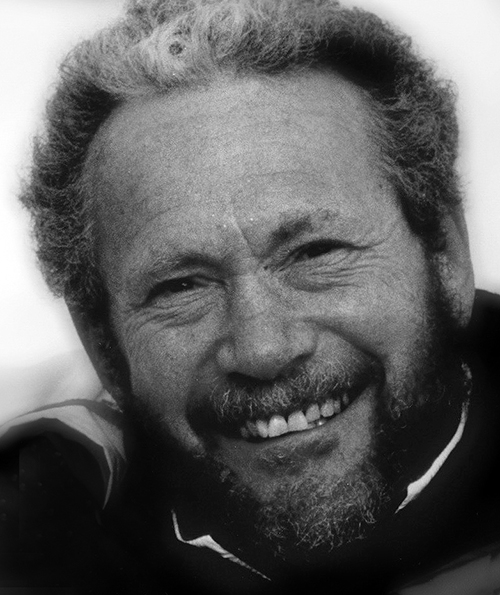
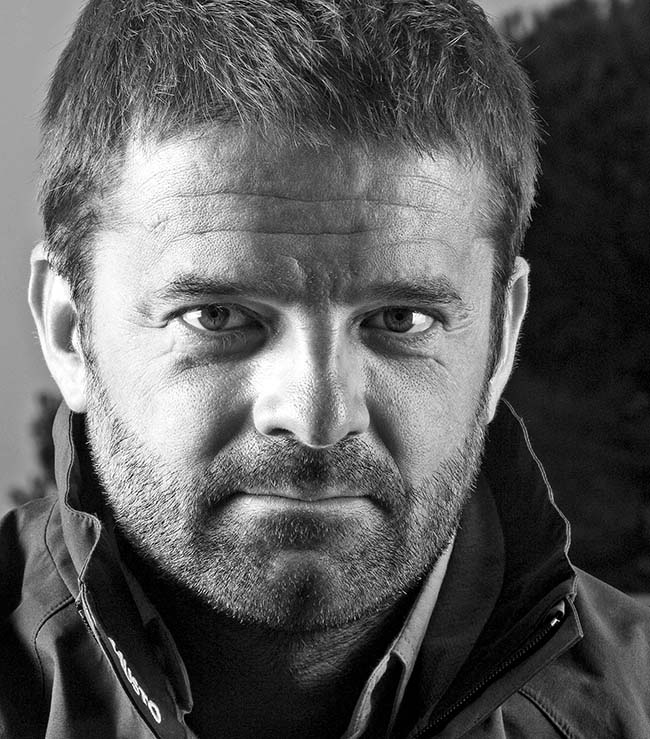
Olivier de Kersauson(1)(1)TJV_SKIPPER_ODK_2_bw Archives Rivacomgrew up in Brittany where his family, hailing from French aristocracy and already distinguished by numerous privateers and adventurers, had lived for centuries. The young viscount who had sailed throughout his childhood quickly abandoned his studies in economics to widen his adventures across the oceans of the world…

In 1964, Olivier de Kersauson was 20 years old when he got to know Éric Tabarly, the captain of the Pen-Duick, on which he carried out his military service. Becoming Tabarly’s second-in-command, Olivier de Kersauson was present at all the victories marking the incredible Pen-Duick saga: the Sydney-to-Hobart race, the Fastnet, the Gotland Race, the Transpac…

Multihull pioneer

Kersauson became a skipper on board the Kriter II, in 1975-1976, for the London-Sydney-London race. Winner of the first leg of this race, he lost the second leg due to keel damage.
The man from Brittany stood out for his boldness and his sense of innovation. He was the first to construct a composite multihull (Ribourel), then to launch a trimaran with long floats (Poulain) with which he came out second in the Course de l’Europe in 1987, won several Grand Prix, and beat the solo round-the-world record in 1989.

An obsession with the Jules Verne

As of 1992, the multihull pioneer devoted himself to circumnavigation speed records by lengthening his former trimaran to compete with ENZA, the catamaran of Peter Blake and Robin Knox-Johnston, in 1993. Both teams would end up damaged in South Africa, allowing Peyron to emerge as the first to go under the 80-day mark.

But in 1997, Olivier de Kersauson finally bettered the record by one week and carried off the Jules Verne Trophy on board his trimaran Sport Elec, the ex-Poulain, Un autre regard, Charal, and Lyonnaise des Eaux Dumez, lengthened and strengthened on multiple occasions. He completed his world tour in 71 days, 14 hours, 22 minutes and 8 seconds.

In 2004, it was on board a new maxi-trimaran, the first Ultim’ three-hull in history, baptized Geronimo, that Kersauson took out the Trophy yet again.

Pacific records

A double winner of the Jules Verne Trophy, Olivier de Kersauson attacked and won, in 2005 and 2006, most speed records in the Pacific such as The Challenge around Australia, taken from Peter Blake, the Transpac or the Yokohama-San Francisco, still with Geronimo.

Objective America’s Cup

Fascinated by the America’s Cup, “France’s favorite sailor” joined up with Franck Cammas and Michel Desjoyeaux to represent France at the 35the edition of the America’s Cup in 2017, in the Groupama Team France.

Carreer (extract)

1989Solo round-the-world record in 125 days, 19 hours and 32 minutes.

1997Jules Verne Trophy in 71 days, 14 hours, 22 minutes.

2004Jules Verne Trophy in 63 days, 13 hours, 59 minutes.

2005The Challenge in 17 days, 12 hours, 57 minutes; record for crossing the Pacific Ocean from Los Angeles to Honolulu in 4 days, 19 hours, 31 minutes.

2006San Francisco-Yokohama record in 14 days, 22 hours, 40 minutes; San Francisco-Yokohama record in 13 days, 22 hours, 38 minutes; Yokohama-Hong Kong in 4 days, 17 hours, 47 minutes ad 23 seconds.
Peter Blake

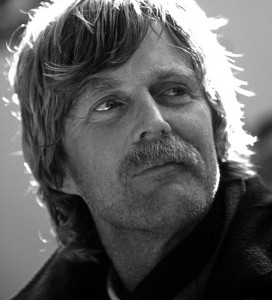
Sir Peter Blake(2)(2) ©Photo Christian Février was an outstanding yachtsman and adventurer, and an international sporting celebrity.

Sir Peter Blake was born in New Zealand in 1948(3)(3)Sir Peter Blake, An Amazing Life, by Alan Sefton, Sheridan House., and grew up in Bayswater with the Waitemata Harbour as his back yard.

In a thirty year sailing career, Sir Peter won every significant blue-water race on the planet, including the America’s Cup and the Whitbread Round the World Race, and slashed the record for the fastest non-stop circumnavigation of the world under sail.

Knighted for his achievements, Sir Peter turned away from competitive sailing in the last years of his life to pursue a passion for helping to protect the environments that had given him so much pleasure. Sir Peter’s decision to devote his life to saving the world’s oceans ended tragically with his death at the hands of pirates on the Amazon River in 2001.

His wife Pippa, Lady Blake and their children Sarah-Jane & James work closely with the Trust set up in his name, to continue his legacy of leadership & environmental education.

Find out more on : www.sirpeterblaketrust.org

Robin Knox-Johnston

Sir Robin Knox-Johnston(4)(4)TJV_SKIPPER_ROBIN_bw The Sir Peter Blake Trust Collection / Alan Sefton. Photo Henri Thibault © Agence DPPI is the first person to sail single handed and non-stop around the world. The sole finisher out of nine entrants, he crossed the finish line of the Sunday Times Golden Globe race, off Falmouth, UK, on 22 April 1969, after 312 days at sea.
Sir Robin Knox-Johnston was born on the 17th March 1939, in Putney, London. The eldest of 4 brothers, he attended school at Berkhamsted in Hertfordshire, the same school as Bill Tilman and Graham Greene. His main interests were long running, swimming and boxing. Not very good at team sports, indeed, he chose tennis as opposed to cricket, but usually slipped away to his grandparents house to work on a 1927 Austin 7 car instead of either.

Sir Robin went to sea in the Merchant Navy in 1957 as a Deck officer with the British India Steam Navigation Company, gaining his Master’s Certificate in 1965.

Following his Golden Globe solo circumnavigation in 1969, Sir Robin skippered Condor to Line Honours in two legs of the 1977-1978 Whitbread Race; co-skippered Enza New Zealand with the late Peter Blake to take the Jules Verne Trophy in 1994 for the fastest circumnavigation of the world; and completed the Velux 5 Oceans solo round the world race in fourth position in 2006-2007 at the age of 68.

In 1992 “RKJ” was invited to become President of the Sail Training Association, a youth development organisation which operated two topsail schooners “Sir Winston Churchill” and “Malcolm Miller” and also organised the annual Tall Ships races. Before he retired in 2001 £11 million had been raised to replace these two vessels with two larger brigs “Prince William” and “Stavros Niarchos”

Sir Robin Knox-Johnston was knighted in 1995 and has been the UK’s Yachtsman of the Year four times. He was International Sailing Federation (ISAF) sailor of the Year with Peter Blake in 1994 and in 2007 was one of the first six inductees into the ISAF Hall of Fame.

He served as a Trustee of the National Maritime Museum, at Greenwich from 1993 until 2003, and on the Sports Lottery Panel and Sport England Council from 1996 until 2002. He is currently President of the Little Ship Club and the Cruising Association and Chairman of Clipper Ventures plc.

In 1996 Sir Robin Knox-Johnston created the Clipper Round the World Yacht Race to offer people from all walks of life and ages the experience of ocean racing together with the opportunity of completing a circumnavigation.

He became the Yachting Journalists’Association’s British Yachtsman of the Year for the fourth time, in 2015.
The YJA awarded 75 years old Sir Robin with the honour following his podium place in French solo classic the Route du Rhum in November 2014, as he had made a return to competitive solo ocean racing after competing in the Rolex Sydney Hobart Yacht Race with one of his Clipper Race crews in 2013.

In 2015, Sir Robin Knox-Johnston also became the Vice Chairman of the Association Tour du Monde en 80 Jours, which supports the Jules Verne Trophy.

Pascal Bidégorry

A ski and mountaineering enthusiast, Pascal Bidégorry(5)(5)TJV_SKIPPER_Bidegorry_bw ©PAUCE/BPCE took part in his first major sailing race at the age of twenty-six. Beginning competition later than his contemporaries, the skipper originating from the Basque Country then made a name for himself as one of the most talented skippers in his generation.

His list of achievements namely includes a victory in the Solitaire du Figaro, two in the Transat Jacques Vabre, the ORMA World Champion title for multihulls, and winner of the Challenge Julius Baer in 2010 in the D35 category.

Elite

In 2004, Pascal Bidégorry joined the Banque Populaire Team, the prestigious French racing elite selected and sponsored by the Banque Populaire group. Soon, he convinced the group to buy Fred Le Peutrec’s trimaran and to let him to restore it his way. On board this rejuvenated vessel, he took out the Multihull World Championship title and the Jacques Vabre Transat in 2005.

The BPV adventure

The skipper then presided over the design of the giant trimaran Banque Populaire V (BPV), on which he would start beating major ocean records on crewed vessels in 2009: the crossing of the North Atlantic in 3 days, 15 hours, 25 minutes and 48 seconds, and the greatest distance to be sailed in 24 hours, in other words 908.2 miles. The following year, it was across the Mediterranean Sea that the man from Basque and his crew would be fastest, in 14 hours, 20 minutes and 34 seconds.
Pascal Bidégorry’s ultimate objective was to lead BPV to conquer the Jules Verne Trophy. But his first attempt, in 2011, was halted by a collision with a non-identified floating object on the 13th day at sea.

His collaboration with the Banque Populaire Team ended at the start of April 2011 before he could make another attempt at the Jules Verne Trophy.

Pascal Bidgorry is now continuing his career and filling out his list of awards while brandishing other colors – namely the gold and black of the Spindrift Racing team, now owner of the ex-Banque Populaire V!

Awards (extract):

2005 – Winner of the Transat Jacques Vabre on a 60’ multihull

2007 – 3rd in the Transat Jacques Vabre on a 60’ multihull

2009 – Holder of the record for sailing across the North Atlantic with a crew

2010 – Holder of the record for sailing across the Mediterranean with a crew on the Maxi Banque Populaire

2011 – 
Jules Verne Trophy: attempt on the Maxi Banque Populaire V 
- Winner of the Krys Match Race

2012 – 1st in the Krys Ocean Race and winner of the Multi One Championship (Mod 70 Spindrift)

– 2nd in the Round Europe Sailing Race (MOD 70 Spindrift)

2013 – 2nd in the Transat Jacques Vabre with Marc Guillemot on Safran in the IMOCA category

2014-2015 – Volvo Ocean Race on Dongfeng

2015 – Winner of the Transat Jacques Vabre duo on MACIF Ultime with François Gabart

Ellen MacArthur

Ellen MacArthur(6)(6)Photo Gilles Martin Raget© Photo Gilles Martin-Raget wrote a page in the book of yachting history in 2005 when she beat the solo circumnavigation record by sailing around the world in 71 days, 14 hours, 18 minutes and 33 seconds…

Dame Ellen MacArthur remains, to date, at the top of British prize-winning ocean sailors, after winning the Ostar transatlantic in 2000, the Route du Rhum in 2002, and finishing second in the Vendée Globe 2000-2001 at the tender age of 24.

The young champion announced her intention to quit professional sailing in 2010. Growing awareness of the environmental cause during her many voyages over the world’s oceans prompted her to set up the Ellen MacArthur Foundation and to devote herself to new challenges. Interacting with the fields of teaching, business and public authorities, the navigator is now channelling her energy into a quick transition towards a “circular economy” respectful of humans and the planet. Reports published by the foundation have reaped praise at the Davos World Economic Forum, where Dame Ellen acts as Vice-Chair of the Global Agenda Meta-Council on the circular economy. From 2012 to 2014, she sat on the Resource Efficiency Platform launched by the European Commission.

The sailor also founded the Ellen MacArthur Cancer Trust whose aim is to introduce young convalescents to sailing.

In 2008, three years after being knighted by Queen Elizabeth II, Ellen MacArthur received the French Legion of Honour.

Tracy Edwards

Tracy Edwards(7)(7)TJV_SKIPPER_EDWARDS_bw© Royal&Sunalliance won international fame in 1989 as the skipper of the first all female crew to sail around the world in the Whitbread Round the World Yacht Race. The boat won two legs and came second overall in her class. The best result for a British boat since 1977.

In 1990 Tracy was awarded Sportswoman of the Year and an MBE. She was the first woman to achieve acceptance by the British yachting community and paved the way for other women, notably Dawn Riley and Ellen MacArthur to follow.

Following her groundbreaking success with Maiden, Tracy set to consolidate her position as one of the world’s top sailors by entering Trophy Jules Verne in 1998 with the Royal SunAlliance boat, again with an all-female crew. This yachting trophy is for the fastest circumnavigation around the world with no stopping and no outside assistance. Tracy and her crew broke seven world records during their two-year programme. One of these, the Channel Record was the fastest ocean record in the world for three years. She was well on course for the record for more than half of their route, but was thwarted by treacherous seas off the coast of Chile and her mast snapped in two. Tracy and her crew managed to sail the stricken yacht to Chile. It took 16 days to cover some 2000 miles to shore, with no outside assistance.

Tracy retired from round-the-world sailing two years later when pregnant with her daughter Mackenna, and decided to turn her attention to managing sailing projects for her team. In 2001 she acquired Maiden II, the fastest catamaran in the world and she and her team set about breaking records, including the Everest of sailing records, the 24-hour record, and their own Channel record.

In 2005 Tracy staged the first ever round the work sailing event to start and finish in the Middle East by putting on The Oryx Quest 05 in Qatar.

Tracy dedicates a large amount of her time to charity. Her three main charity commitments are as Patron of Regenerate UK, a small but highly effective charity working in Roehampton with disadvantaged young people, to the NSPCC as an Ambassador and as an Ambassador to Gingerbread which gives free advice and help to single parents.  She is also involved with The Lady Taverners, The Prince’s Trust, The Ahoy Centre, Emmaus, Action for Children and The Duke of Edinburgh Awards Scheme. Tracy’s tumultuous childhood has given her a unique way to contribute to the organisations she helps and she is passionately committed to giving youngsters a second chance. Sailing gave Tracy a future at a time in her life when things could have gone badly wrong and now she uses that experience to help others.